Greater Trochanteric Pain Syndrome (Lateral Hip Pain) Treatment
Does a sharp or burning pain on the outside of your hip keep you awake at night?
You may be suffering from Greater Trochanteric Pain Syndrome (GTPS), historically known as Trochanteric Bursitis. At The Clinic at Borde Hill, we specialise in treating persistent lateral hip pain, helping patients from Haywards Heath, Lindfield, and across West Sussex return to walking, sleeping, and living comfortably.
In Short: When Hip Pain Needs Treatment
- Typical symptoms: Pain on the outside of the hip/thigh, often worse when lying on that side in bed, crossing your legs, or climbing stairs.
- When to seek help: If the pain disturbs your sleep or prevents you from walking your usual distance.
- Best treatment: Strengthening the gluteal tendons (load management), avoiding compression (posture), and Shockwave Therapy.
- Recovery time: With the proper management, significant improvement is often seen within 12 weeks.
Meet Dwaine Ford: Chronic Hip Pain Specialist

Dwaine is a highly experienced musculoskeletal practitioner with a specialist focus on resolving chronic pain and persistent injuries.
He has particular expertise in the management of lower-limb tendinopathies, including the stubborn gluteal tendon pain associated with GTPS. As the lead for Extracorporeal Shockwave Therapy (ESWT) at The Clinic at Borde Hill, Dwaine combines advanced technology with targeted rehab to stimulate healing in tendons that have stopped repairing themselves.
What is Greater Trochanteric Pain Syndrome (GTPS)?
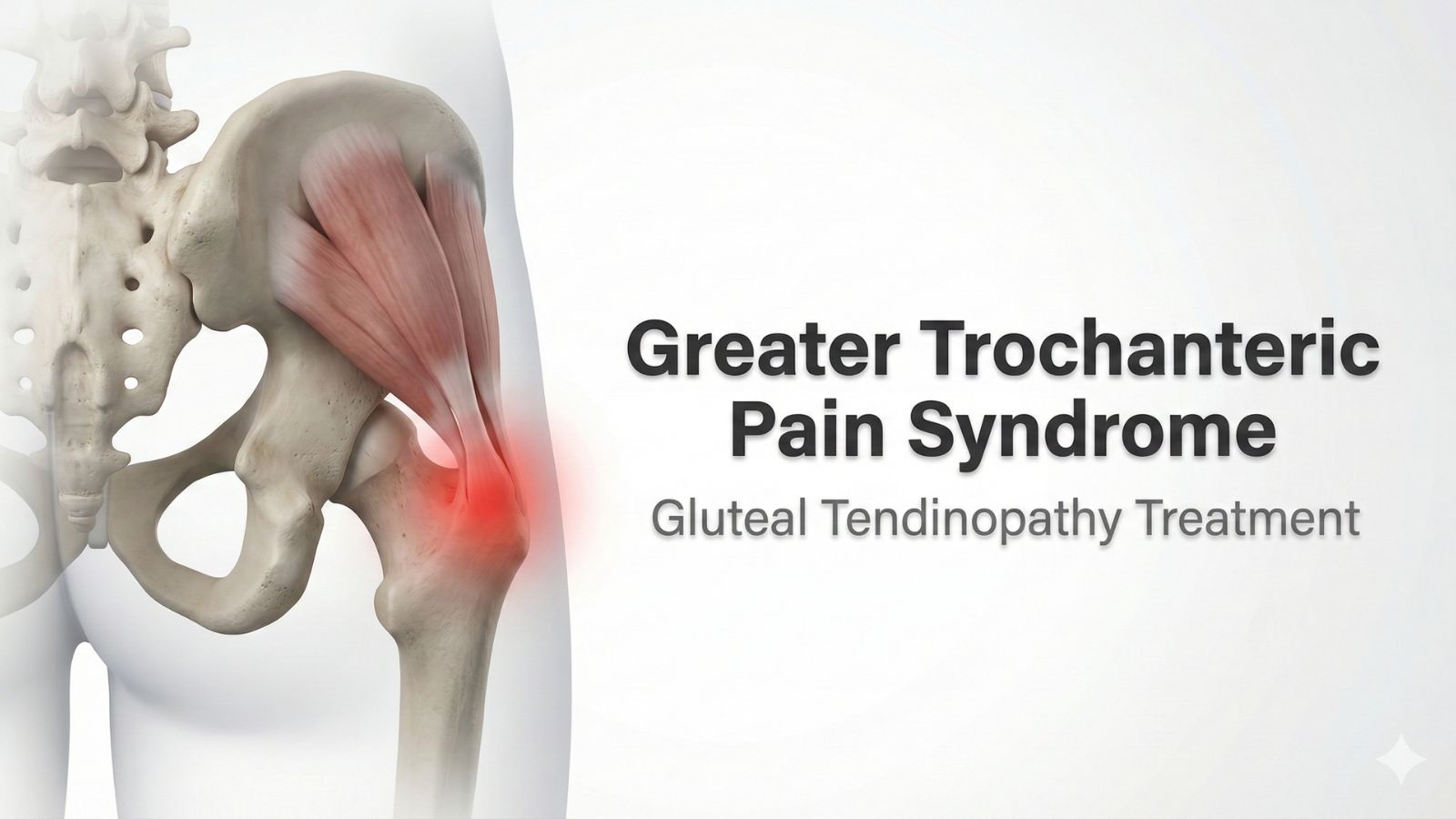
GTPS is an umbrella term used to describe pain and tenderness over the Greater Trochanter (the bony bump on the side of your hip).
While traditionally diagnosed as “Hip Bursitis” (inflammation of the fluid-filled sac), modern research shows that in the vast majority of cases, the pain is actually caused by Gluteal Tendinopathy—a breakdown in the tendons of the Gluteus Medius and Gluteus Minimus muscles.
Because tendons require load to heal, treating this condition with just “rest and ice” often fails.
Signs & Symptoms
If you are struggling with hip pain, check for these hallmark signs of GTPS:
- Night Pain: This is the most common complaint—unable to sleep on the painful side, and often painful to lie on the unaffected side (due to the leg dropping across).
- Localised Tenderness: The bony prominence on the side of the hip is very tender to touch.
- Pain with Activity: Pain when standing on one leg, climbing stairs, or walking up hills.
- Transferred Pain: The ache can sometimes radiate down the outside of the thigh to the knee.
Causes and Risk Factors
- Hormonal Changes: It is most prevalent in women aged 40–60, as changing oestrogen levels can impact tendon health.
- Rapid Load Increase: Suddenly taking up running or significantly increasing walking distance.
- Biomechanics: Weak pelvic control (“dropping” the hip when walking) or standing with one hip “popped out” (hanging on the hip).
Our Evidence-Based Treatment Approach
At The Clinic at Borde Hill, we move beyond temporary injections. Our goal is to rebuild the tendon’s capacity to handle your daily life.
1. Accurate Diagnosis
We differentiate GTPS from other conditions, such as hip osteoarthritis or referred pain from the lower back, through a clinical assessment.
2. Gluteal Loading Programmes
We utilise specific isometric and strengthening protocols designed to enhance the gluteal tendons without irritating the bursa. This is the “Gold Standard” for long-term recovery.
3. Shockwave Therapy (ESWT)
For persistent or calcific cases, we use Extracorporeal Shockwave Therapy. This creates a biological response that reduces pain and stimulates tendon regeneration. It is highly effective for GTPS where manual therapy alone has not worked.
Learn more about our Shockwave Therapy Service.
4. Lifestyle & Sleep Advice
Small changes make a big difference. We teach you how to modify your sleeping position (using pillows correctly) and standing posture to stop compressing the tendon, allowing it to heal.
Why Choose The Clinic at Borde Hill?
- Convenient Access: Located in the beautiful grounds of Borde Hill, we serve patients from Haywards Heath, Burgess Hill, Cuckfield, and Balcombe with ample free parking right outside.
- Specialist Expertise: We treat the cause (the tendon), not just the symptom (the inflammation).
- Advanced Tech: We are one of the few clinics in the Mid-Sussex area offering focused rehabilitation combined with Shockwave therapy.
Frequently Asked Questions (FAQ)
Is GTPS the same as Hip Bursitis? They are related, but not the same. “Bursitis” implies inflammation is the main issue. However, most cases are actually a problem with the tendon (tendinopathy). We treat both, but focusing on the tendon usually provides better long-term results.
Can I still walk with hip pain? Yes, but you should monitor your “pain budget.” We usually recommend staying active but avoiding hills or speeds that spike your pain levels. We will help you find your “safe zone” for activity.
How do I stop the pain at night? We recommend sleeping on your back with a pillow under your knees, or on your good side with a thick pillow between your legs to keep the top hip level. This prevents the painful tendon from being stretched and compressed while you sleep.
If you’re struggling with Lateral Hip Pain that sounds like this, you can request an assessment with Dwaine using the contact form on this page or by calling 01444 616797.