
Summary:
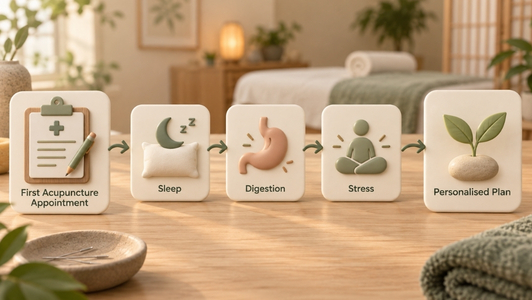
During an acupuncture consultation, practitioners ask about your sleep, digestion, and stress alongside your main physical symptoms. Traditional acupuncture views the body as an interconnected system, meaning these everyday health details help build an accurate picture of your overall well-being. At The Clinic at Borde Hill, this allows our Lic.Ac BSc Hons (Acupuncture) team to create a safe, personalised treatment plan for you.
You may book acupuncture because of one particular concern, then find yourself being asked about your sleep, digestion, stress levels, appetite and general health.
It can seem unrelated at first.
But these are common acupuncture consultation questions. In traditional acupuncture, the first appointment often involves looking at your wider health and lifestyle rather than focusing only on one symptom. The British Acupuncture Council describes this broader health history as part of a traditional acupuncture consultation.
At the Clinic at Borde Hill in West Sussex, this conversation helps your acupuncturist understand you as an individual before discussing an appropriate treatment plan.
Why the First Conversation Matters
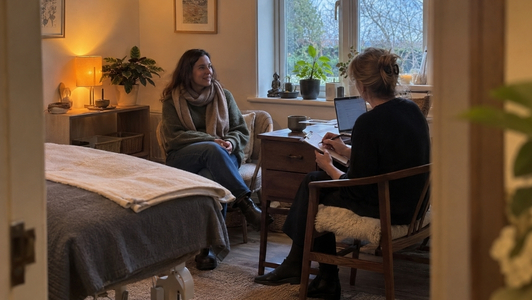
Your first acupuncture appointment usually begins with questions before any needles are used.
Your acupuncturist may ask about:
- Your main reason for attending
- How long you have noticed the problem
- Previous illnesses or injuries
- Medication and other treatment
- Sleep
- Daily food habits
- Digestion and appetite
- Stress and emotional wellbeing
- Energy levels
- Lifestyle and daily routine
This gives the practitioner a fuller health history and provides an opportunity to discuss whether acupuncture is appropriate for you.
BAcC guidance notes (1) that practitioners may also take a pulse, examine the area involved and look at the tongue as part of a traditional assessment.
Why Ask About Your Sleep?
Sleep is one part of your overall health history.
Your acupuncturist might ask whether you:
- Find it difficult to fall asleep
- Wake during the night
- Wake feeling refreshed
- Have noticed recent changes in your sleep
The purpose is not to assume that every sleep problem can be explained or treated through acupuncture.
Instead, knowing how you are sleeping adds context to the rest of the information you share.
Changes in sleep can also sometimes be important for your wider healthcare, so persistent or concerning sleep problems may need discussion with your GP.
Why Does Digestion Come Up?
Questions about digestion can sometimes surprise people who booked for a completely different reason.
A traditional acupuncture consultation may include questions about appetite, bowel habits, bloating or other changes because practitioners take a broad view of your current health and lifestyle.
This information helps your acupuncturist understand the overall picture.
It does not mean that digestive symptoms should automatically be attributed to a traditional acupuncture explanation. New, persistent or unexplained digestive problems should be medically assessed when appropriate.
Why Your Acupuncturist Asks About Stress
Stress can affect many parts of everyday life, including how you feel, sleep and cope with physical discomfort.
Your acupuncturist may therefore ask whether anything has changed at work, at home or in your general routine.
You do not have to share anything you are uncomfortable discussing.
The purpose is simply to understand factors that may be relevant to your overall wellbeing and to make the consultation more individual to you.
It is also important to distinguish this from claiming that acupuncture will treat anxiety, stress-related disorders or insomnia. ASA guidance requires appropriate clinical evidence for health and treatment claims, including implied claims. (2)
Do You Need to Prepare for These Questions?
Not really.
You do not need to arrive with perfect answers.
It can, however, be useful to know:
- What medication you currently take
- Any important medical diagnoses
- Recent changes in your health
- Previous treatment you have received
- What you would like to discuss at the appointment
Be open about your medical history. It helps your practitioner decide whether treatment is suitable and whether anything should be discussed with another healthcare professional first.
Your Acupuncture Consultation in West Sussex
At the Clinic at Borde Hill, our acupuncturists take time to understand your health history before planning treatment. The clinic’s acupuncture team includes Lesley Reed, Lic.Ac BSc Hons (Acupuncture), MAAC, MBAF and Maarika Rool, both of whom provide acupuncture as part of the clinic’s acupuncture service.
So if you are asked about sleep, digestion or stress, do not worry that the conversation has gone off track. These questions form part of building a broader picture of your health and discussing an individual approach.
Thinking About Your First Acupuncture Appointment?
If you are considering acupuncture and would like to know whether making an appointment may be suitable for you, speak to the team at the Clinic at Borde Hill in West Sussex.
You can learn more about our acupuncture service in West Sussex and meet our registered acupuncturists before arranging your appointment. Contact the clinic to check availability or ask a question before booking.
Frequently Ask Questions
Do I need to unbutton my shirt or get undressed for an acupuncture assessment?
Usually, no. Most acupuncturists only need access to points on your lower arms, lower legs, head, or back. Wearing loose, comfortable clothing allows easy access without needing to fully undress.
What if I don’t feel comfortable answering personal questions during acupuncture?
You only need to share what you feel comfortable with. While background details about stress or sleep help your practitioner understand your overall health, you are always in control of the conversation.
Will an acupuncturist diagnose my digestive or sleep issues?
No. Acupuncturists evaluate how these factors relate to your overall well-being within a traditional medicine framework, but they do not replace a medical diagnosis. Persistent or new symptoms should always be evaluated by your GP.
This article was reviewed and assured by
Lesley Reed, Lic.Ac BSc Hons (Acupuncture), MAAC, MBAF, is a qualified and licensed acupuncturist. She combines Traditional Chinese Medicine with Five Element and Stems and Branches approaches, and also holds qualifications in massage and reflexology. Lesley is known for her calm, reassuring manner and has particular interests in pain management, fertility, anxiety and facial revitalisation.
Reference