
Chronic Proximal (High) Hamstring Tendinopathy Treatment
Do you feel deep, nagging pain high up in your hamstring or buttock, especially when sitting or running?
This is often caused by Chronic Proximal Hamstring Tendinopathy, a persistent injury commonly referred to as High Hamstring Tendinopathy. At The Clinic at Borde Hill, we specialise in getting to the root cause of complex tendon pain, helping patients across Haywards Heath and Sussex finally find lasting relief.
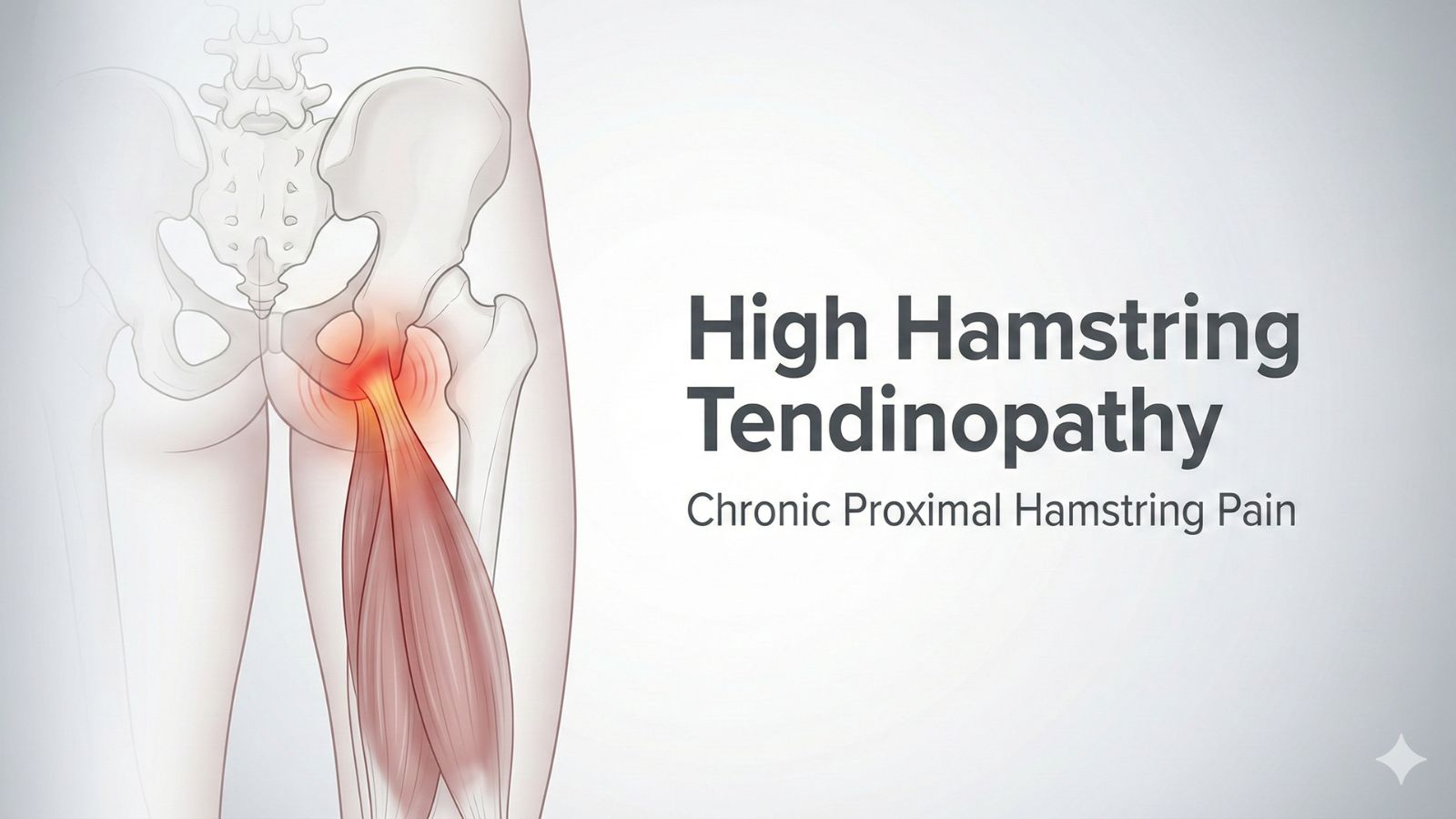
In Short: When High Hamstring Pain Needs Treatment
- Typical symptoms: Deep gluteal pain, often worsening when sitting or during high-speed running, and tenderness right below the sit bone (ischial tuberosity).
- When to seek help: Pain lasting more than 8–12 weeks that restricts your daily life, exercise, or prevents you from sitting comfortably.
- Best treatment: Graded loading (eccentric/isometric exercise), pain management, and specialized modalities like Shockwave Therapy.
- Recovery time: Recovery is typically slow, ranging from 3 to 9 months due to the injury’s chronic nature.
Meet Dwaine Ford: Your Tendon Specialist

Dwaine is a highly experienced musculoskeletal practitioner with a specialist focus on resolving chronic pain and persistent injuries. He leads the Extracorporeal Shockwave Therapy (ESWT) services at The Clinic at Borde Hill.
Dwaine combines advanced shockwave protocols with evidence-based rehabilitation strategies to treat stubborn conditions, such as Chronic Proximal Hamstring Tendinopathy, Plantar Fasciitis, and Achilles tendinopathy, helping patients achieve long-term recovery even where previous treatments may have failed.
What is Proximal Hamstring Tendinopathy?
This is a chronic overuse injury affecting the three hamstring tendons (Semimembranosus, Semitendinosus, and Biceps femoris) where they attach high up on the ischial tuberosity (the sitting bone).
The condition involves degeneration and micro-trauma in the tendon structure due to repetitive loading, often stemming from:
- Running or sprinting (especially sudden increases in intensity)
- Cycling or rowing
- Prolonged periods of sitting, which compress the tendon
Signs & Symptoms
If you are struggling with pain in your posterior thigh or buttock, look for these common signs:
- Deep Pain: A dull ache or sharp pain located precisely under the gluteal fold, right at the sit bone.
- Pain with Sitting: Discomfort or aggravation when sitting for extended periods, especially on hard surfaces.
- Painful Activities: Pain is often triggered by lunging, squatting, stretching the hamstrings, or accelerating while running.
- Tenderness: Intense soreness when pressing directly on the ischial tuberosity.
Our Evidence-Based Treatment Programme
At The Clinic at Borde Hill, our recovery programmes follow the latest clinical guidelines to ensure long-term resolution and address the specific need for load tolerance in the hamstring tendons.
1. Accurate Diagnosis
High hamstring pain is often misdiagnosed as sciatica or a simple muscle strain. We use a comprehensive biomechanical assessment and advanced testing to confirm that it is a true tendinopathy, enabling precise treatment planning.
2. Specialist Tendon Loading Programmes
Complete rest is counterproductive. Our programme is structured using Isometric exercises (holding contractions) to immediately reduce pain, followed by gradual Eccentric and Heavy Slow Resistance (HSR) loading to stimulate tendon healing and rebuild its capacity.
3. Extracorporeal Shockwave Therapy (ESWT)
For chronic cases that have not responded to traditional exercise, we recommend Shockwave Therapy. This non-invasive treatment stimulates cellular regeneration and blood flow in the painful tendon tissue, significantly accelerating healing.
Learn more about Shockwave Therapy at our Borde Hill Clinic
4. Addressing Biomechanics
We assess functional weaknesses in the kinetic chain (pelvis, core, feet) that may be overloading the hamstring attachment. Correcting these underlying issues is key to preventing recurrence.
Why Choose The Clinic at Borde Hill in Haywards Heath?
- Expert Care: Our highly experienced physiotherapists, led by tendon specialist Dwaine Ford, focus solely on musculoskeletal health.
- Local Access: Conveniently based in the tranquil setting of Borde Hill, Haywards Heath, easily accessible for patients across the West Sussex area, including Burgess Hill and Lindfield.
- Advanced Technology: We use advanced tools such as Shockwave Therapy to complement your rehabilitation programme.
Frequently Asked Questions (FAQ)
How long does Chronic Proximal Hamstring Tendinopathy take to heal? Recovery is gradual, typically ranging from 3 to 9 months. Consistency with the prescribed loading programme is the most critical factor for successful resolution.
Can I still run or exercise with this injury? Your practitioner will design a modified programme to maintain your fitness without overloading the tendon. We focus on relative rest from high-stress activities (like sprinting) while increasing tendon strength and tolerance.
Is Shockwave Therapy painful? Shockwave therapy can be briefly uncomfortable during application, but it is very well-tolerated by most patients. The short duration (a few minutes per session) makes the treatment manageable.
If you’re struggling with hamstring that sounds like this, you can request an assessment with Dwaine using the contact form on this page or by calling 01444 616797.